Gingivitis
Inflammation of the gum only. Gums are red, puffy and bleed when brushed. Fully reversible with a proper cleaning and better home care.
Periodontal care
It is the leading cause of tooth loss in adults, and most people who have it do not know. Bleeding when you brush is the first sign, and at that stage it is still reversible.
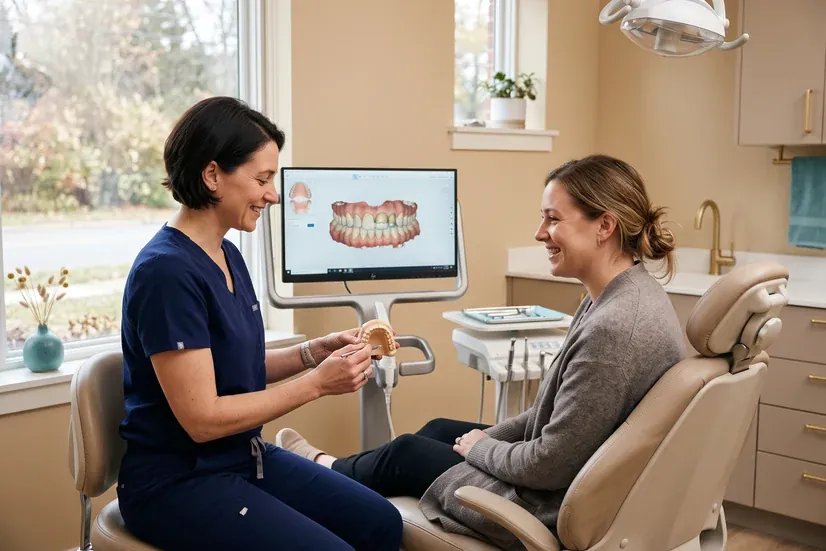
Inflammation of the gum only. Gums are red, puffy and bleed when brushed. Fully reversible with a proper cleaning and better home care.
The inflammation reaches the bone that holds the tooth. Pockets form, bone is lost, and that loss does not come back.
Teeth loosen, drift and are eventually lost. By the time it is obvious, most of the damage is already done.
Pocket depths are charted around every tooth, so there is a number to compare against next time rather than an impression.
Scaling and root planing under local anaesthetic, cleaning the root surface below the gum where a normal cleaning cannot reach.
Usually every three to four months rather than six. This is the part that actually keeps the disease stopped.
Why we take it seriously
Gum disease is a chronic inflammatory condition, and it does not stay in your mouth. Its association with heart disease, stroke, poorly controlled diabetes and adverse pregnancy outcomes is well documented.
Dr. Lizzio has a long-standing interest in reading oral health as part of general health, which is why the gum examination here is a measurement rather than a glance. If you are diabetic or pregnant, tell us — it changes how often we want to see you.
Questions
No, the opposite. Bleeding is inflammation, and inflammation is caused by what is sitting at the gum line. Brushing gently but thoroughly, and flossing, usually settles gingivitis within a fortnight. If it does not, come in.
It is done under local anaesthetic, so no. Afterwards the gums can be tender for a day or two and teeth may be sensitive to cold for a few weeks as the gum tightens.
Because the bacteria that caused the problem repopulate a treated pocket in about twelve weeks. Three-monthly maintenance interrupts that cycle; six-monthly does not.
In selected cases grafting can regenerate some of it. Mostly the goal is to stop further loss, which is why catching it early matters so much.
The appointment that prevents the other eight.
Explore →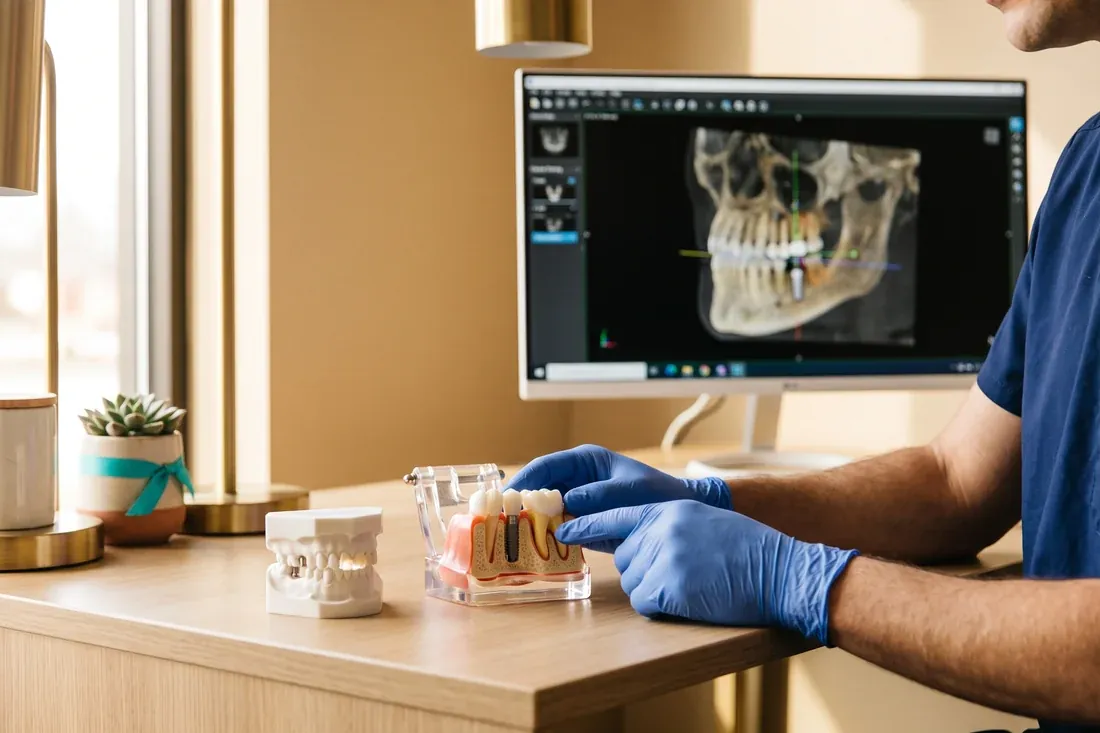
One tooth or a full arch, rooted in bone.
Explore →When a tooth genuinely cannot be kept.
Explore →The mouth read as part of the whole body.
Explore →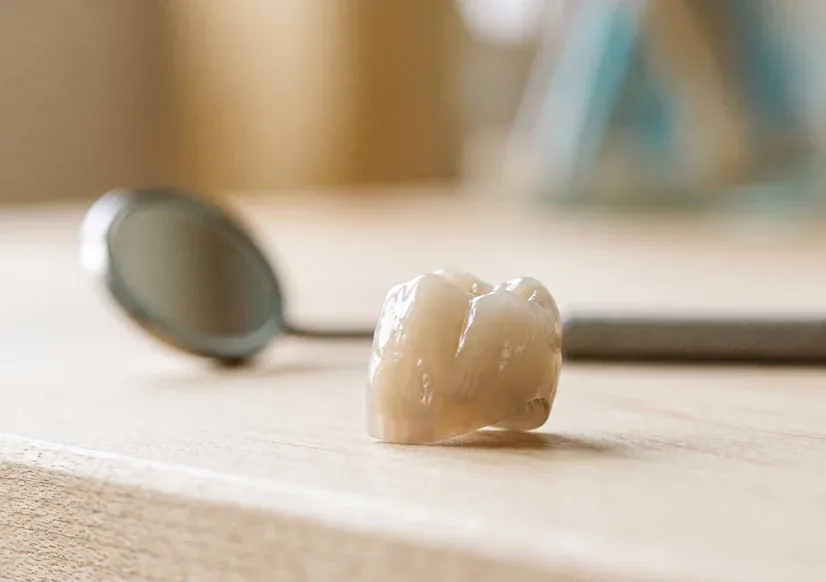
When a tooth needs covering rather than filling.
Explore →
If it has been years, start here.
Explore →Next step
The first appointment is an examination and a conversation. There is no obligation to book treatment at the end of it.