Inlay
Sits inside the cusps of the tooth, replacing the damaged centre. Think of it as a filling made in a laboratory and bonded in as one solid piece.
Inlays & onlays
When a back tooth has lost too much structure to hold a filling reliably, but still has enough healthy tooth to be worth keeping, an inlay or onlay preserves the difference.
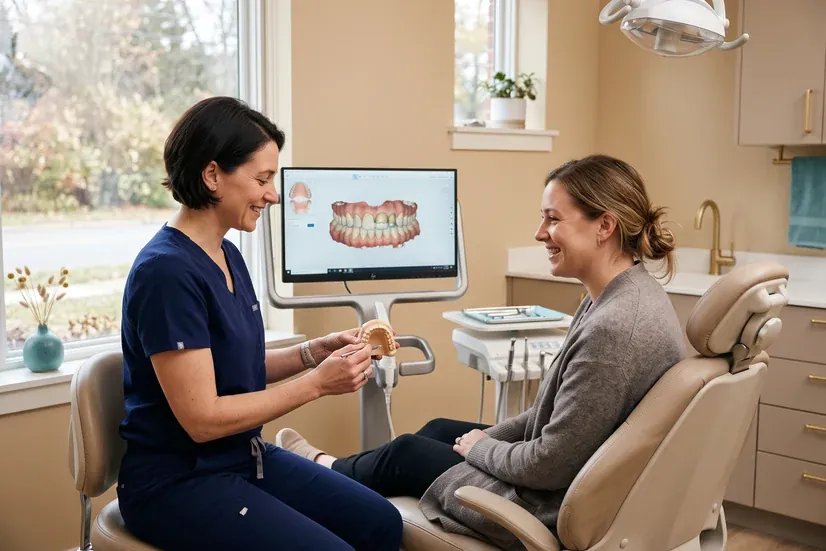
Sits inside the cusps of the tooth, replacing the damaged centre. Think of it as a filling made in a laboratory and bonded in as one solid piece.
Does the same but also covers one or more of the cusps — the raised corners that take the chewing load.
Covers the whole tooth. More protective, but it means cutting the tooth down all round. More on crowns
A large direct filling in a back tooth is held in by the walls around it. Once those walls get thin, chewing force starts to flex them, and eventually one splits — often below the gum, which is how a restorable tooth becomes an extraction.
An inlay or onlay is made outside the mouth and bonded in as a single rigid piece, so it supports the remaining tooth rather than pushing it apart. It costs more than a filling and less than losing the tooth.
Questions
Usually two. The tooth is prepared and a scan or impression taken at the first, the restoration is fitted at the second, with a temporary in between.
Usually porcelain or a high-strength ceramic, colour matched to the tooth. Gold is still the longest-lasting material for a back tooth if appearance does not matter to you.
Often partially, as a restorative rather than cosmetic procedure. We check and quote your portion before starting.
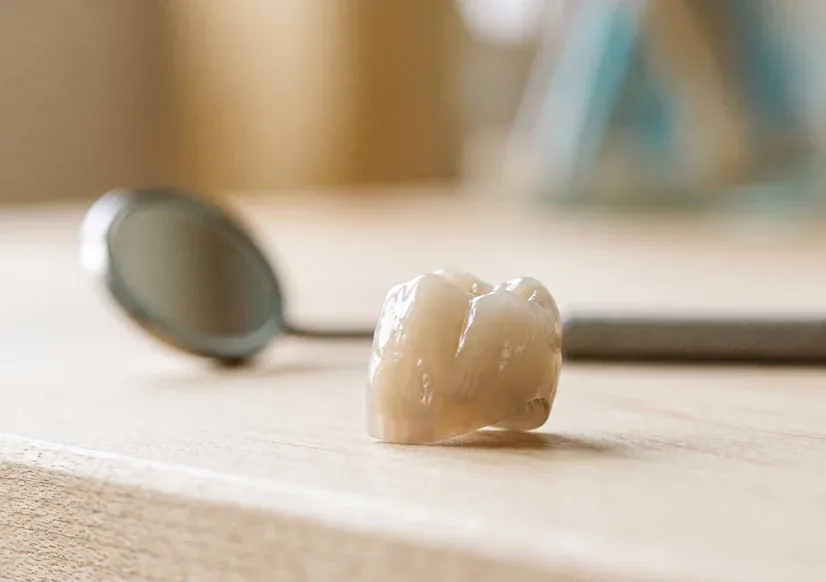
When a tooth needs covering rather than filling.
Explore →Saving a tooth whose nerve has died.
Explore →
The appointment that prevents the other eight.
Explore →
Where to start, and what it costs.
Explore →A fixed replacement anchored to its neighbours.
Explore →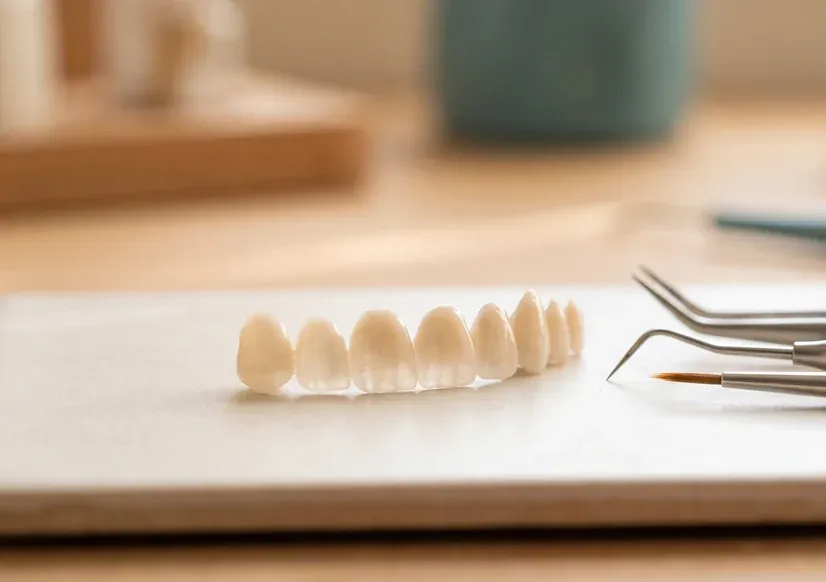
Shape, shade and alignment corrected together.
Explore →Next step
The first appointment is an examination and a conversation. There is no obligation to book treatment at the end of it.