The others move
Teeth either side drift into a gap and the opposing tooth grows down into it. A simple gap becomes a bite problem.
Dental bridges
A bridge spans a gap using the teeth either side as supports. It is fixed, it is quicker than an implant, and it has one real cost: those neighbouring teeth have to be cut down.
Teeth either side drift into a gap and the opposing tooth grows down into it. A simple gap becomes a bite problem.
You start favouring the other side, which loads it harder and wears it faster.
Under a bridge the ridge is unloaded and continues to shrink. An implant is the option that addresses that.
A bridge is the right answer when the teeth either side of the gap already need crowns, when bone or health rules out surgery, or when you need it finished in weeks rather than months.
An implant is usually the better long-term answer when those neighbours are healthy and untouched, because cutting down two sound teeth to replace one is a real price that never appears on the estimate. We will show you both, with figures.
Questions
With a floss threader, an interdental brush or a water flosser. The area under the false tooth is where a bridge fails, and it takes about thirty seconds a day.
Many years with good cleaning. The commonest failure is decay in one of the supporting teeth, which is preventable.
Preparation is done under local anaesthetic. Afterwards the gum around the supports can be tender for a few days.
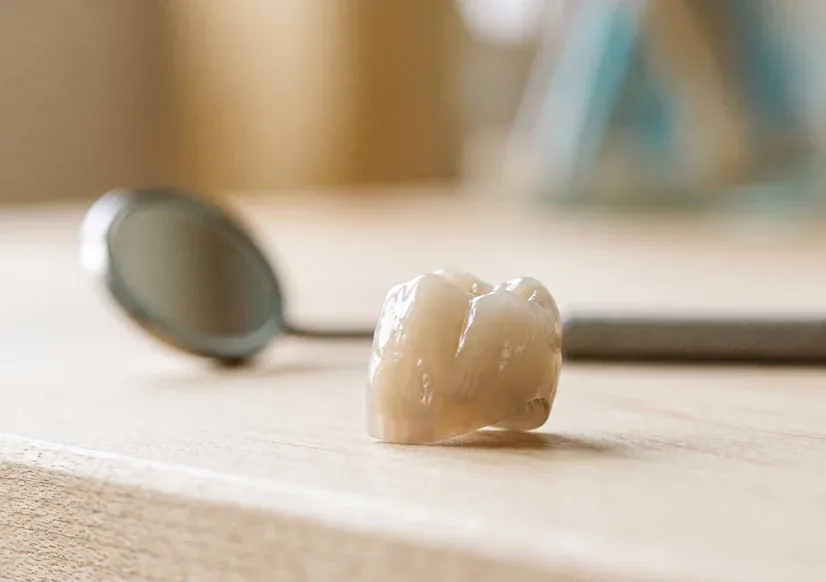
When a tooth needs covering rather than filling.
Explore →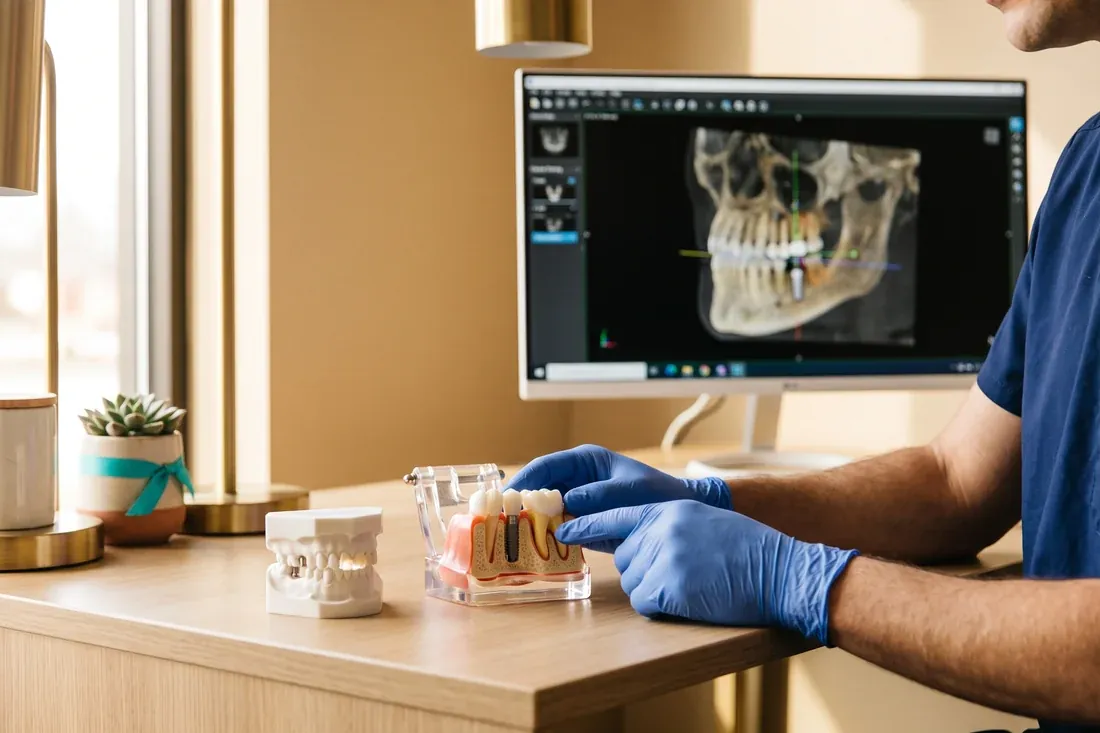
One tooth or a full arch, rooted in bone.
Explore →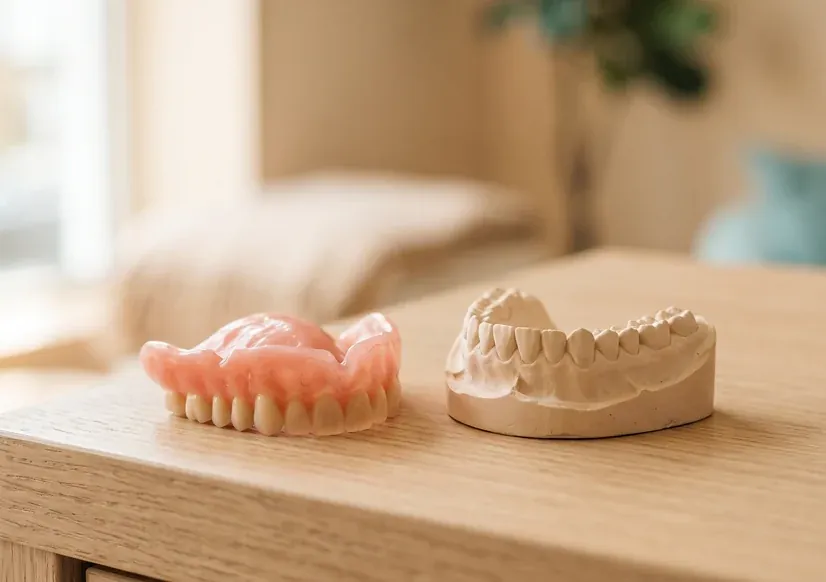
Full and partial, with implant options.
Explore →
When a tooth genuinely cannot be kept.
Explore →
The appointment that prevents the other eight.
Explore →Gum disease caught, treated and kept in check.
Explore →Next step
The first appointment is an examination and a conversation. There is no obligation to book treatment at the end of it.