After a root canal
A root-treated back tooth is brittle and splits under load. A crown is not optional afterwards; it is what makes the root canal worth having.
Dental crowns
A crown caps the whole tooth and takes the chewing load off it. It is what stands between a cracked or root-treated back tooth and an extraction.
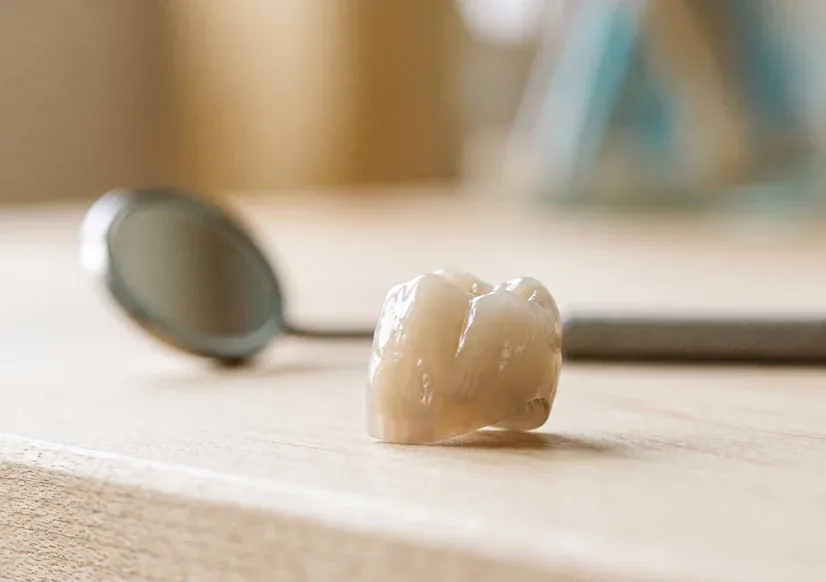
A root-treated back tooth is brittle and splits under load. A crown is not optional afterwards; it is what makes the root canal worth having.
A crown holds a cracked tooth together. Left alone, cracks propagate, and they tend to end below the gum.
Once the remaining walls are thin, another filling will not hold and will eventually take a wall with it.
Zirconia or lithium disilicate. Strong, tooth-coloured, no dark metal line at the gum. The default for most teeth now.
An older option, still useful in some situations, but it can show a grey line at the gum as the gum recedes.
Still the kindest material to the opposing tooth and the longest-lasting on a molar, if the appearance does not bother you.
Questions
Usually two, a fortnight or so apart, with a temporary crown in between.
An all-ceramic crown matched in daylight is difficult to pick out. Front teeth are harder than back ones because of translucency, and we take more time over them.
Many years, and often far longer. What ends a crown is usually decay at its margin or gum disease underneath, not the crown itself — which is why cleanings matter more after one, not less.
It happens. Keep it, call us, and avoid chewing on that side. Do not use household glue.
A fixed replacement anchored to its neighbours.
Explore →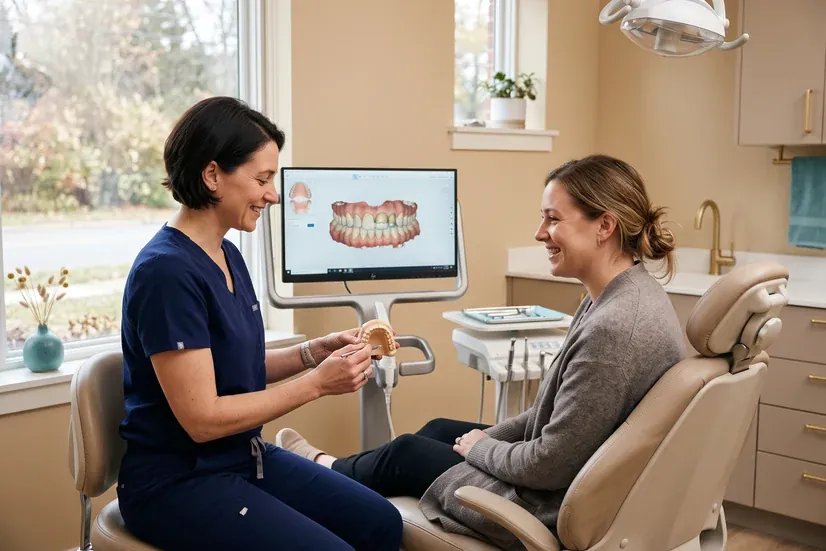
Saving a tooth whose nerve has died.
Explore →The step between a filling and a crown.
Explore →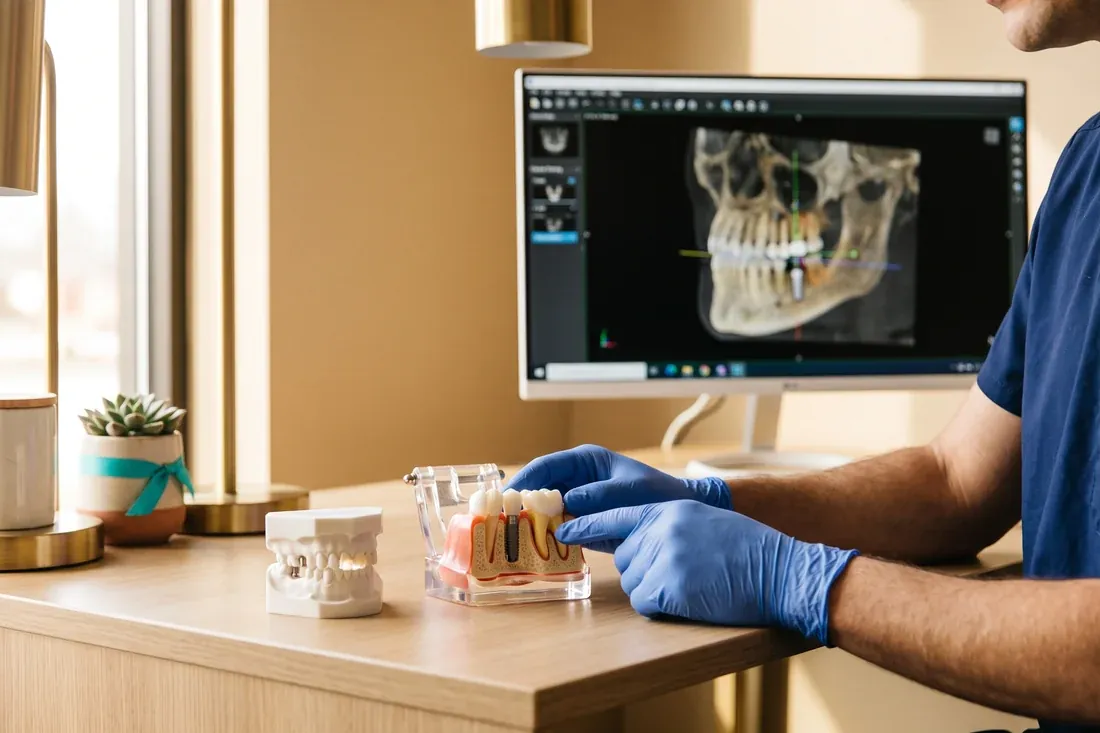
One tooth or a full arch, rooted in bone.
Explore →When a tooth genuinely cannot be kept.
Explore →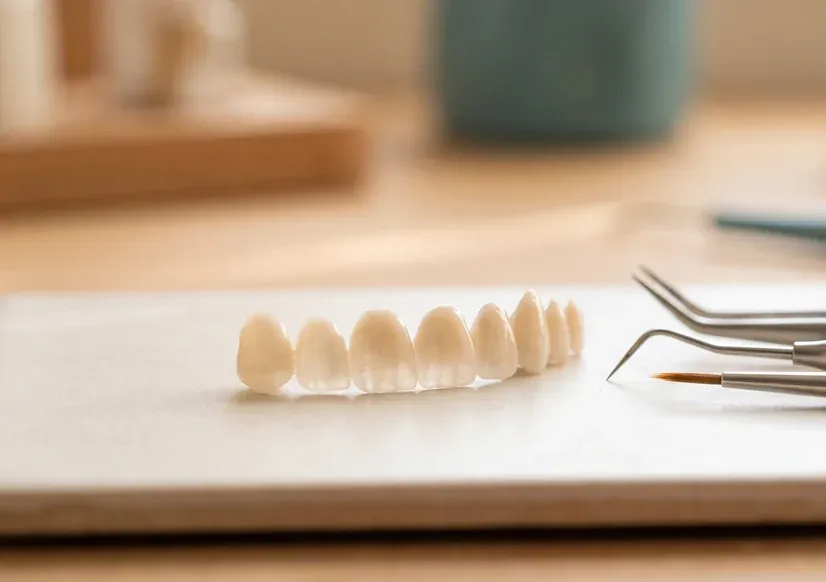
Shape, shade and alignment corrected together.
Explore →Next step
The first appointment is an examination and a conversation. There is no obligation to book treatment at the end of it.